
Waste Innovation·January 19, 2026· 6 min read
Waste Innovation: Lessons from the 60-Pound Experiment
What sixty pounds of broken garbage bins taught us about the future of regenerative manufacturing.
A pile of cracked HDPE, ABS, and aluminum became floating docks, fence posts, and stepping stones. The lesson is bigger than the product.
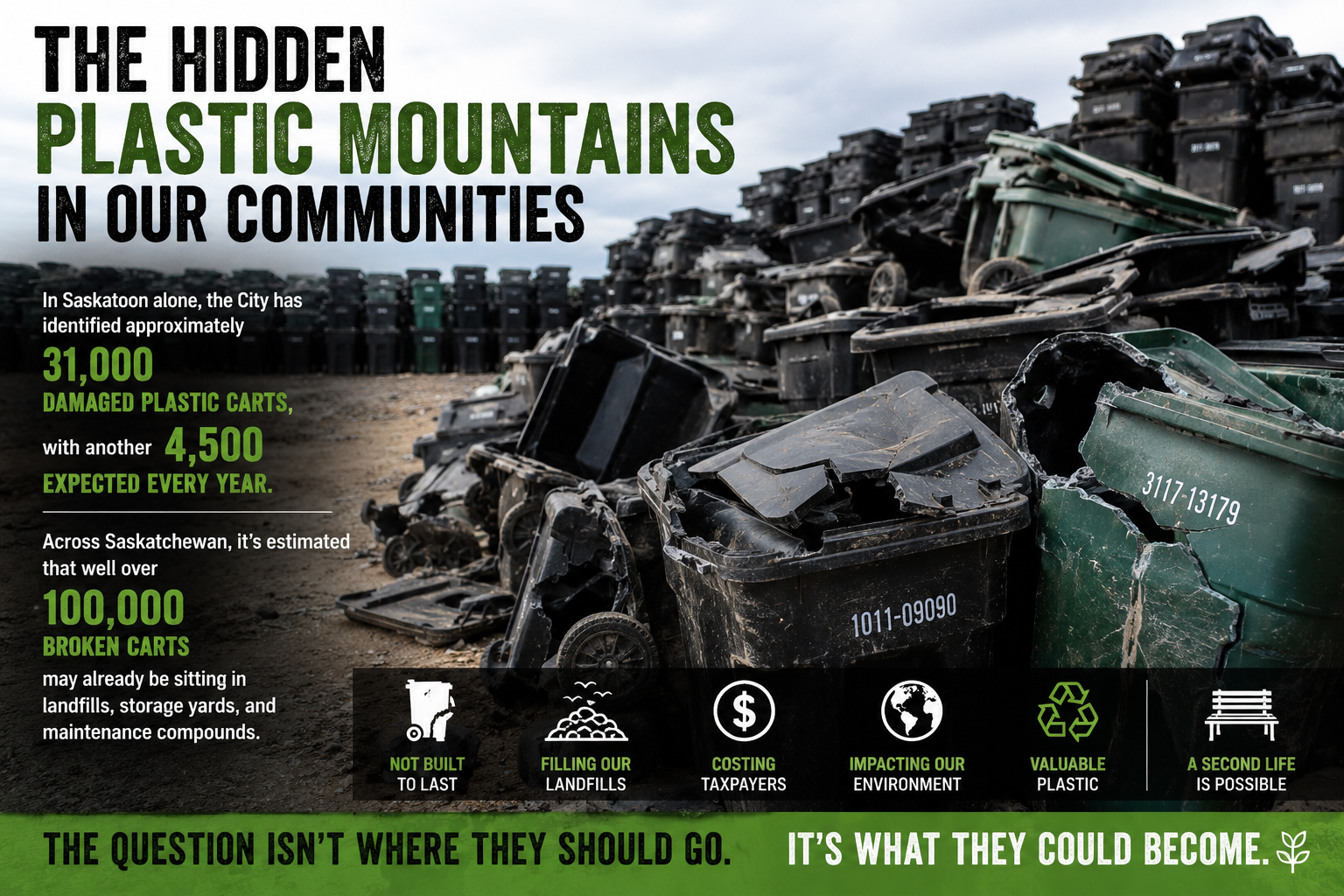
The experiment began with a problem most municipalities have but rarely talk about: broken curbside bins. Mixed plastics, contaminated, too low-grade for conventional recycling, too bulky for landfill nostalgia. We took sixty pounds of them — HDPE, ABS, a little aluminum — and asked a different question. Not 'how do we recycle this' but 'what local, durable, useful objects can this become'.
The quiet inventory
Floating docks. Curb stops. Stepping stones. Fence posts. Modular barriers for traffic calming. Each one is a piece of municipal infrastructure that would otherwise have been bought from a faraway factory in virgin material. Each one is now a piece of the same neighborhood that produced the waste.
“The point is not the docks. The point is the radius.”
Why local matters
Hauling mixed plastic across a continent to be downcycled is its own kind of waste. Local regenerative manufacturing — small, modular, sited near the waste it consumes — collapses the transport footprint and rebuilds a kind of neighborhood industry that used to be common. The 60-pound experiment is a proof of concept; the next one is sized in tonnes.
Shop the Look
Pieces from the dispatch.
Suggested Reading